
ॐ नमो भगवते वासुदेवाय"
Moksha Dwaar Seva – A Humble Offering in the Soul’s Ascent to Eternal Light
Asti Visarjan in Kashi (Varanasi) / Rameshwar
Quick Service Request
Request a Call back
The Deeper Symbolism of Asti Visarjan / Immersion of Ashes..
Beyond religious doctrine, Asti Visarjan is a reflection of Vedantic truth—the realization that the body returns to the five elements (Panchabhuta) while the Atman (soul) journeys onward. This sacred act reminds us of life’s impermanence and the soul’s timeless nature.
It is also an act of shraddha—not only a ritual, but a gesture of love, respect, and gratitude. For the bereaved, it is a step toward emotional closure, a final affirmation that every duty has been fulfilled, and the soul is at peace.
Asti Visarjan—the immersion of the cremated remains (ash and bone fragments) of a departed soul—is among the most sacred rites in Hindu dharma. It is not merely a ritual of letting go; it is an act of profound spiritual redemption, emotional release, and ancestral duty, designed to guide the soul towards moksha — liberation from the cycle of birth and death.
When performed at sanctified pilgrimage sites like Kashi (Varanasi) and Rameshwaram, Asti Visarjan becomes more than tradition; it becomes a final gift of peace, love, and eternal freedom to your loved one’s departed soul.
Kashi and Rameshwaram – Two Gateways, One Divine Purpose
In the sacred geography of India, Kashi in the north and Rameshwaram in the south stand as two eternal Moksha Dwaars—gateways to liberation. While one is caressed by the holy Ganga, the other rests upon the shores of the infinite ocean. Both are steeped in scriptural wisdom, mythological grandeur, and timeless reverence.
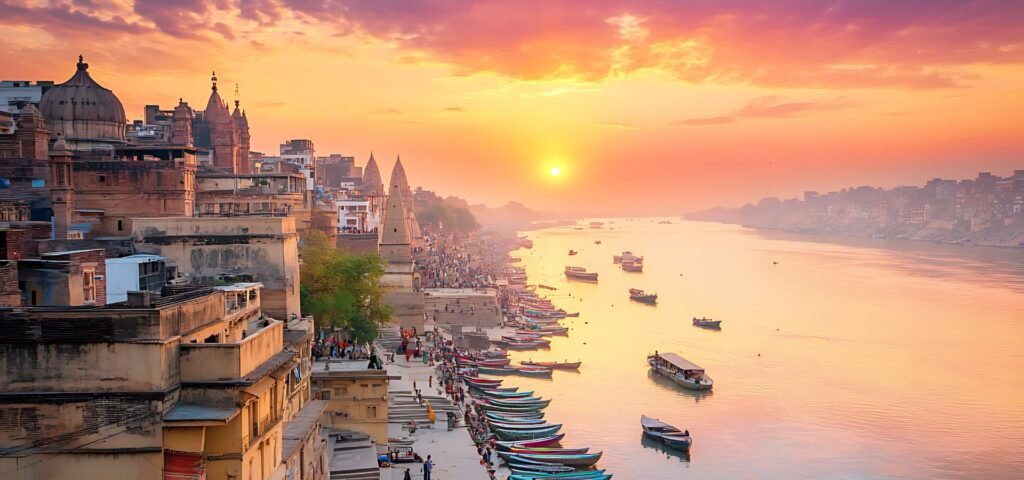
Kashi – Where the Soul Merges with the Divine Flow
Kashi, the spiritual heart of India, is where the Ganga flows not just as a river, but as a goddess, a mother, and a liberator. Performing Asti Visarjan here connects the soul to an unbroken lineage of saints, seekers, and ancestors who attained peace on these sacred banks.
As per the Garuda Purana, Skanda Purana, and Vishnu Smriti, the Ganga is endowed with the power to wash away karmic debts, dissolving all remnants of worldly bondage. The tale of King Bhagiratha, who brought Ganga to earth to liberate his ancestors, echoes through every ritual performed here.
Asti Visarjan in Kashi is not just the immersion of ash into water—it is the soul’s return to its source, its homecoming to eternity.
Rameshwaram – The Southern Threshold of Eternal Peace
On the tranquil shores of the Bay of Bengal lies Rameshwaram, a sacred tirtha sanctified by the footprints of Lord Rama. It was here, after the conquest of Lanka, that he performed the shraddha for his ancestors, forever blessing this land as a holy seat of Pitr Karya (ancestral rites).
Home to the revered Ramanathaswamy Temple—one of the twelve Jyotirlingas—Rameshwaram holds deep significance in Skanda Purana and other sacred texts. It is said that lifetimes of karma are dissolved when Asti Visarjan is performed here with devotion and purity.
For countless families, especially across South India, Rameshwaram is not just a location—it is a legacy, a place where tradition, memory, and moksha converge.
Why Choose Us
Why Families Choose Kashi / Rameshwaram
Scriptural Sanctity
Both destinations are praised in ancient scriptures as direct paths to liberation.
Divine Waters
Ganga in Kashi and the Ocean in Rameshwaram are considered spiritually purifying and cosmically powerful.
Ritual Precision
The rites performed in these tirthas follow ancient Vedic traditions guided by learned priests.
Cultural Legacy
These journeys connect families to generations past—reaffirming identity, dharma, and spiritual belonging.
Emotional Healing
The peace of fulfilling this duty brings inner resolution and grace to those who grieve.
Performing the rituals
Asti immersion at Kashi and Shuddhi Pooja at Rameshwaram — holds deep spiritual significance in our tradition.